
Future development in the segment for small and medium-sized enterprises (SMEs) is largely determined by four key drivers: the market, competition, regulation and the product range. Increasing and changing requirements of SMEs and changing framework conditions also require comprehensive consideration when implementing growth initiatives in the SME segment.
Consileon implemented a growth initiative for the business customer segment that took into account key drivers as well as the changing business environment.
Project goals (excerpt)
As a company for entrepreneurs, Consileon with many years of experience in implementing growth initiatives was able to successfully support the financial institution and its SME segment in the execution end-to-end.
Small and medium-sized enterprises (SMEs) make a significant contribution to Germany’s economic output and are also one of the most important customer groups in the banking environment. In the past, the price/performance ratio was often the focus of the decision when choosing the right business account. However, a business account does not usually have one price, but is made up of various factors and performance components. Depending on the business model and orientation, different aspects and services are relevant. Important influencing factors, in addition to the classic banking services related to payment transactions, are increasingly the speed of opening and the additional features offered that are integrated in the business account.
Consileon supported the design, development and implementation of a modular building block for individual account models for business customers at an international financial institution.
Consileon accompanied the entire project and supported it with many years of industry experience in technical issues as well as with methodical competence in project management.
Small and medium-sized enterprises (SMEs) are one of the most important customer groups in the banking sector. Influenced in part by their experience in the private financial sector, SMEs have particularly high expectations of the support and interaction concept. They increasingly expect the use of modern media and innovations in financial management.
Consileon supported a financial institution in designing an online branch for business customers to create a holistic and location-independent support concept that meets the current requirements of SME customers.
Consileon supported the financial institution holistically in the technical definition and conception. Our many years of experience in the segment for business customers contributed to the success of the project.
Banks must deliver concepts that meet requirements in order to remain relevant to business customers. The key here is to embed products and services in the customer experience in a meaningful way. The involvement of external partners should also not be ruled out if services complement the bank’s own offering in a meaningful way. Due to the heterogeneity of the segment, a clear focus on core products is helpful. In contrast to retail banking, many institutions currently still offer a wide range of products and services, such as account models.
On the one hand, a modular product concept enables sustainable customer-centric orientation and efficient management. On the other hand, the modular approach enables flexibility and freedom of choice for the business customer and offers the consultant new opportunities to offer targeted solutions while reducing complexity. The relevance of modular and thus individually designable products will continue to increase in the small and medium-sized enterprise segment in the future, thus displacing simple package deals in the long term.
Amidst the conflicting priorities of low interest rates, regulation, and rising customer expectations, FinTechs have achieved initial success in lending to small and medium-sized enterprises (SMEs) and have been able to take market share away from banks. Many banks use manual or highly standardized credit assessment procedures to process loan requests from SMEs. These credit models often lead to an unnecessarily negative or distorted assessment of the applicant, which results in rejections.
In order to ensure sustainable relevance in the segment and to have an influence on the development of SMEs, banks must take on the role of a “financial coach”. An understanding of the SME’s general level of maturity must be established so that products and services can be derived around the SME’s activities and ultimately a reliable valuation can be made.
Potential solutions thus address previously unmet needs, such as cash flow management, working capital solutions or rating support. As a positive side effect, the business valuation, often perceived as a necessary evil, can be transformed into a service with added value for the business customer. An active exchange on developments, instead of periodic regulatory requests for business figures, creates added value on both sides.
Banks need to rethink and not just limit themselves to providing financial resources. In principle, local banks still have a trust advantage over FinTechs. This trust must be maintained through targeted support of SMEs and harnessed by means of business expansion.
Digitalization has led to massive disruptions in the automotive industry. At Consileon, we are aware of this and therefore place a special focus on the implementation of digitalization projects in the automotive sector.
Our range of services begins with a holistic strategic view of your business environment, your service portfolio or your IT landscape. In the course of strategy development, we always focus on developing actionable approaches.
An essential step in the implementation of strategies is the adaptation of processes and working methods. This requires a structured process analysis and optimization, taking into account the employees, as well as adaptation of the applied process models.
Operationalization almost always requires the adaptation of IT systems. Here we advise you throughout the entire implementation phase: from the selection of a suitable software solution on the market, to the identification of your specific requirements, to the management of software development in-house. If required, our own developers will support you in creating an individual software solution.
Structured project and portfolio management are key success factors in both classically and agilely implemented IT projects. With our many years of methodological expertise, especially in the Project Management Office (PMO) as well as in portfolio and risk management, we ensure sustainable project success.
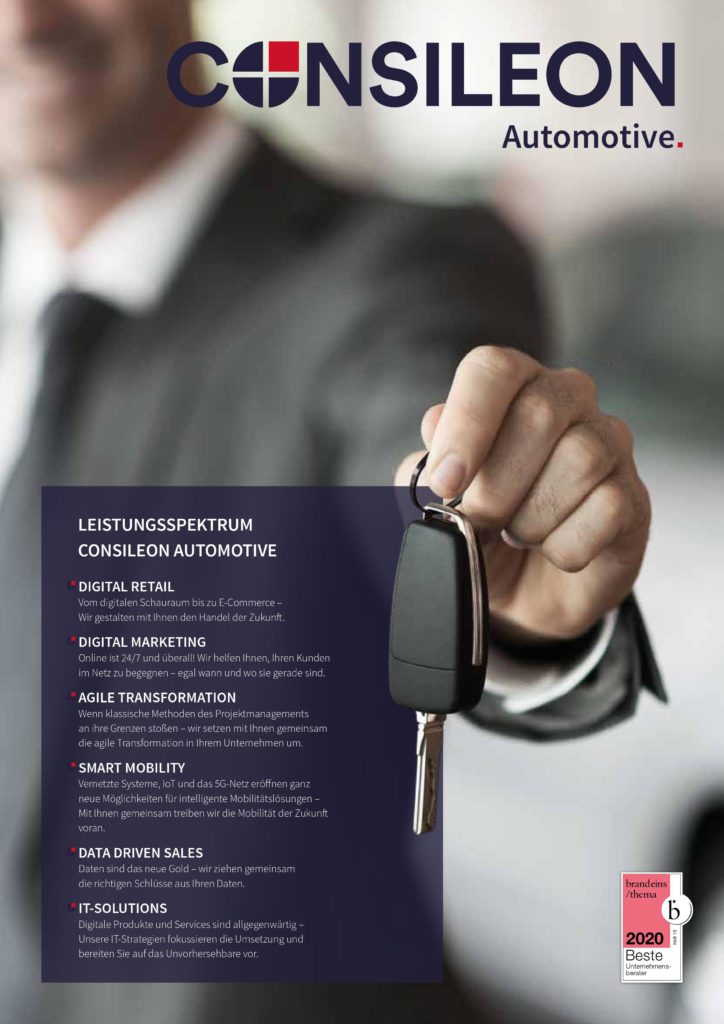
Learn more about our range of services in our brochure. (The brochure is in German.)
“As a result, we are now able to handle more than a five-fold increase in unit volume as well as a three-fold increase in business volume – without any significant increase in staff.”
Peter Streit, Managing Director S-VersicherungsService of the Stadtsparkasse München GmbH
S-Versicherungs Service of Stadtsparkasse München GmbH has been successfully using FiANTEC for the billing and sales management of its sales channels since 1998. Over the years, the business area has been continuously expanded and care has been taken to keep the administrative effort involved as low as possible. “As a result, we are now able to handle more than a five-fold increase in the number of units as well as a three-fold increase in business volume – without any significant increase in personnel,” says Mr. Peter Streit (Managing Director of S-VersicherungsService der Stadtsparkasse München GmbH). Today, in addition to its own business, three other savings banks are serviced by S-VersicherungsService and managed in FiANTEC with their own clients.
“To implement such a project, as we did with FiANTEC, you need powerful, reliable and, above all, flexible partners.”
– Manfred Strauch, Head IT for Finance/Corporate Shared Services Swiss Life Schweiz
Speed and flexibility were required for the implementation of FiANTEC for provisioning and sales master data at Swiss Life Switzerland. Within only 13 months, various legacy systems had to be replaced by a standard system. Today, more than 14 sales channels with more than 20 product factories are mapped in FiANTEC. In the process, several mutation types, commission types and commission variants, etc. must be correctly taken into account in the remuneration.
Speed and flexibility were required for the implementation of FiANTEC for provisioning and sales master data at Swiss Life. Under time pressure, legacy systems had to be replaced by a standard system.
The challenges facing companies like Swiss Life, which thrive on successful sales, are manifold. IT has to load and analyze the large volumes of data and make it available to employees in a targeted manner.
The various sales channels must be linked and customers must receive high-quality and rapid support. Furthermore, it is imperative to make provisioning as error-free and flexible as possible. These high demands require change processes from the management as well as from the employees.
Swiss Life, as a modern-thinking company, reacted quickly to this change and recognized that only effective and innovative IT systems can meet these demands.
Projects such as the replacement of historically grown legacy systems with FiANTEC standard software at Swiss Life Switzerland make it clear how important it is for customers and service providers to cooperate in a spirit of partnership, and why flexibility and pragmatism in particular enable the successful implementation of innovative IT projects.
Among other things, IT is the “assistant” of sales and, with its service, a guarantor for motivated agents and satisfied customers. The entire financial services industry thrives on functioning IT and will have to overcome major challenges with its help in the future.
Management must constantly question the existing systems and, as at Swiss Life, allow for optimization in order to meet the changing requirements. The system optimization with FiANTEC at Swiss Life was carried out under a tight time window. The implementation time for the sales master data area, from the first analysis workshop to going live, was just eleven months and for provisioning 13 months.
Despite the time pressure, the advantages of the FIANTEC software were integrated smoothly into the existing system landscape. The focus of the order for the software experts was on two main points. In the Sales Master Data project, the information of the agents with the contact and personal data as well as the contracts was taken over and migrated centrally into FiANTEC.
The challenge was then to transfer the associated customer information and all customer care information from the various legacy systems. Today, this can be accessed quickly and in a user-friendly manner by Swiss Life employees, which greatly accelerates the individual business processes.
Data exchange with cooperation partners of Swiss Life Switzerland was also continued with automatic interfaces. In addition, the provisioning and mapping of the remuneration system was addressed in a second project. For this purpose, the necessary data was pulled from the system, enabling employees to perform automated billing. Data and information are the heart of sales and, especially for a company like Swiss Life, the basis for successful business.
If data inventories are not up to date or if there are irregularities in commission or even complications in the further processing of customer applications, revenue losses are inevitable.
Optimizing data quality was therefore one of the crucial tasks for FiANTEC during the implementation of the Swiss Life project. When loading data from the legacy systems into the new system, all business rules were already taken into account, resulting in a significant improvement in data quality. As Swiss Life has different sales channels and is supported by a strong sales force, it benefits from the powerful FiANTEC system for sales standards. Here, the large volume of data is mapped by region, team and branch office and stored in the system.
Furthermore, regional information up to the customer’s house number is made available to the field service in order to be able to work efficiently. It was precisely these features of FiANTEC that convinced Swiss Life Switzerland: “The ability to react quickly, efficiently and within one’s own area to changing market conditions is a decisive advantage,” says Manfred Strauch. A major challenge when implementing new systems is always the integration into the existing system landscape and the resulting need to set up interfaces.
Among other things, FIANTEC has web services with which information can be exchanged with the surrounding systems in order to comply with customer protection agreements, for example. Furthermore, the system is already integrated into the quotation process. When business is generated from the CRM, the quotation software or the portal, the subsequent process is handled fully automatically, without the need for an office staff member to enter data into the system by hand.
“The highlight was the actual changeover: our employees were still working in the old system on Friday, and on Monday they booted up the computers and worked on the new one. It was excitement like the Olympics – and we had safely achieved all our goals.”
– Albert Godehart, Project Officer and Product Manager Insurance and Commission Accounting at apoBank
In the course of outsourcing IT to the former GAD eG, one of the largest banking migrations of recent years was carried out, as all banking applications were migrated to GAD’s bank21 banking system. One of the most extensive and challenging sub-projects was the migration and conversion of the central agent database and the commission settlement system of apoBank.
apoBank migrated its entire IT to GAD’s bank21, one of the largest banking migrations in recent years. Also at the start: Smooth commission settlement with FiANTEC.
At the end of 2009, Deutsche Apotheker- und Ärztebank eG (apoBank) made a strategically groundbreaking decision: to no longer consider information technology as a core competence, but to outsource it to GAD. At the same time, this was the starting signal for one of the largest bank migrations in recent years, because after all, all bank applications were to be migrated to GAD’s bank21 banking system. In order to meet the ambitious schedule, precise project management and top performance were required.
One of the most extensive and challenging sub-projects was the migration and conversion of apoBank’s central agent database and commission settlement system. Albert Godehart, project officer and product manager for insurance and commission accounting at apoBank, emphasizes the special role of this system in the bank’s business model: “In addition to our own advisors in our branches, the intermediaries represent another important pillar of our business. Since they cooperate with us on a commission basis, it is of course a central task to always be able to efficiently and reliably handle the diverse business relationships with these partners.”
For this purpose, apoBank had built up its own Oracle-based intermediary database and developed a system itself in which the settlements were processed along with all document and payment flows. At the same time, it served as customer relationship management and had an efficient contract management. A separate business intelligence layer enabled differentiated evaluations for statistics, controlling and management.
The expense of this sophisticated system was well justified. After all, it handles revenues and payments in the clear double-digit millions year after year.
And it was precisely for this model that there were no standards on the market at the time: because here both business process directions were mapped in a uniform workflow. With the decision to outsource information technology to GAD, a solution also had to be found for the continuation of commission settlement.
On the one hand, the solution to be used should also be fully integrated into bank21, on the other hand, the know-how accumulated over many years had to be preserved and used. It made sense to transfer the apoBank application to the FiANTEC settlement solution. In a first phase, a detailed concept was developed, which was significantly influenced by the employees of apo- Bank: “As users, we knew best what was needed,” confirms Albert Godehart. “So all workflows and all important requirements were mapped one-to-one.” Flexibly and in close cooperation, the necessary extensive changes and adjustments were implemented in the standard system. For the several hundred thousand data records, special attention was paid to security and quality assurance as well as to compliance with all legal requirements. In view of the large number of external users entering data on the part of the agents, a highly differentiated authorization management system also had to be included. Since the presentation of the first prototypes, simulations and tests have been started step by step and parallel to the further development work. Intensive testing was an essential prerequisite for smooth commissioning in all subprojects, but here, minor details were still being tweaked literally up to the last minute.
The sub-project was critical insofar as it directly involved payment flows and the system processes legally relevant data and documents. The preparation and implementation of the commission accounting data migration alone took around 500 person days. After two years of project work, the extensive preparations and programming work were completed and the actual migration was on the agenda.
During only one weekend, the entire apoBank IT was completely converted to the new platform. Since then, it has had more powerful, state-of-the-art systems and technologies. As part of the migration project, many processes were optimized and useful functionalities were added. The bottom line is that the outsourcing and the pinpoint execution contribute to significant and sustainable efficiency and cost benefits for apoBank.
“We experienced very good support in this highly critical project,” Albert Godehart sums up. “All essential functions, features, workflows were transferred to the new systems completely and on schedule in intensive, fruitful cooperation. The highlight was the actual changeover: on Friday, our employees were still working in the old system, and on Monday they booted up their computers and worked on the new one. It was excitement like the Olympics – and we had safely achieved all our goals.”
In a big-bang migration approach for market participants, the ECB will introduce the consolidation of TARGET2 and TARGET2-Securities in November 2021. This will be accompanied by a consistent introduction of the ISO20022 standard. The introduction of a collateral management system at the ECB planned for one year later will additionally tie up critical resources in the financial services industry.
Our experts are able to create a dedicated impact analysis for your company and your house within a few weeks. Even after that, we are happy to support you with process optimization, software development and system migration.